
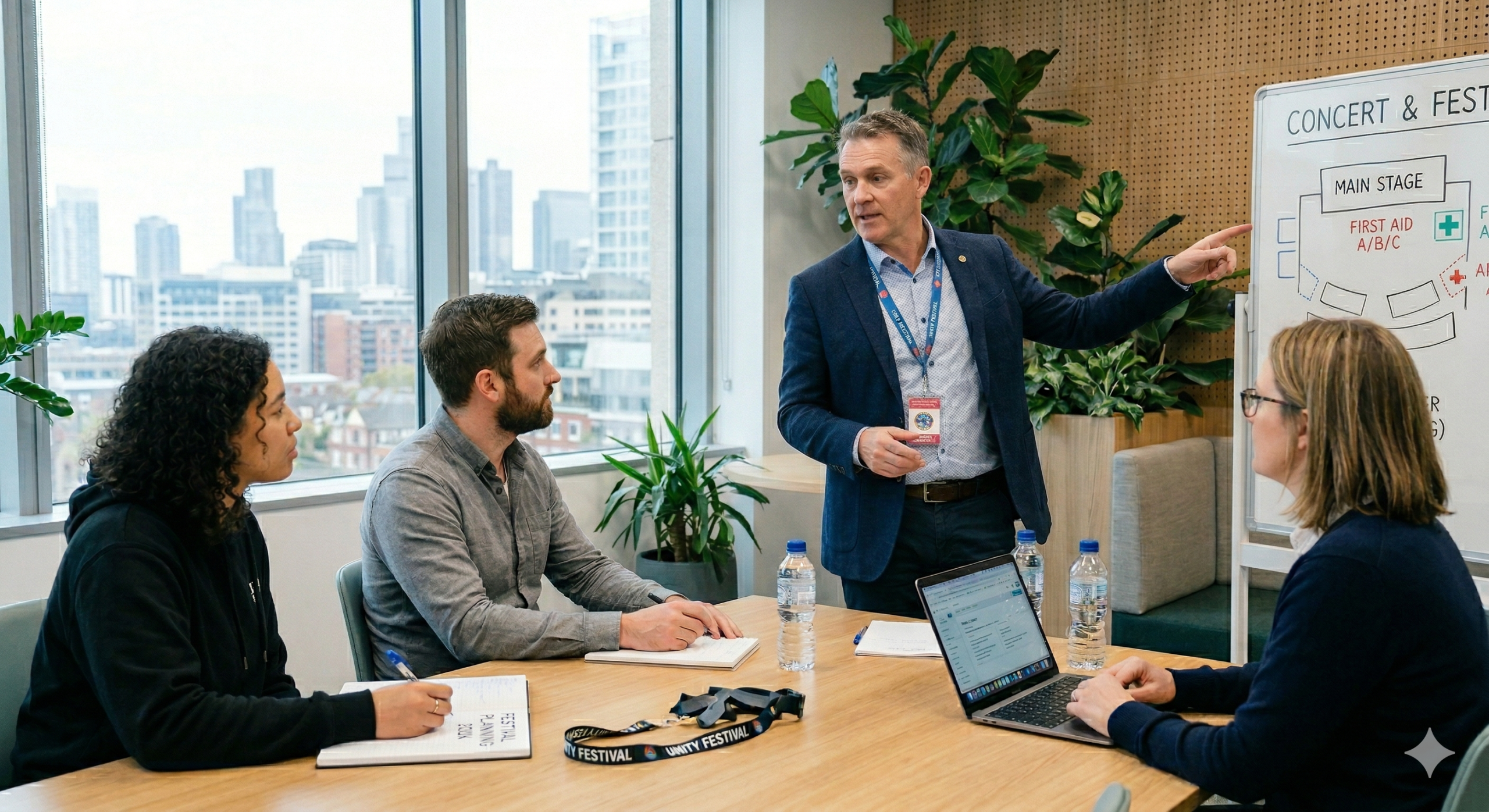
Music festivals and concerts are some of the most high-energy, high-attendance events an organizer can produce and they come with a unique set of First Aid considerations. Crowd density, physical exhaustion, and long event durations all mean having trained First Aid Responders on-site makes a meaningful difference. Whether you’re running a single-stage concert or a multi-day outdoor festival, professional first aid coverage keeps your event moving smoothly.
This guide covers what concert and festival first aid coverage looks like, what to look for in a provider, and how to make sure your attendees are supported from the first guest through the last performance.
1. What Makes Concert and Festival First Aid Coverage Different
For multi-day camping festivals, you add cumulative fatigue, limited access to food and hydration, and overnight First Aid needs. These conditions require a professional First Aid team — not just a basic first aid kit in a tent.
2. What Concert and Festival First Aid Coverage Should Include
Guest Monitoring
Trained First Aid Responders conduct scene surveys and are positioned throughout the event to respond when attendees present with signs of distress, exhaustion, or substance effects.
First Aid and Emergency Response
Coverage should include wound and bleeding care, CPR, AED administration, seizure response, opioid overdose intervention (including appropriate medication guidelines where permitted), and stabilization of exhaustion-related illness.
Physician-Directed Guidelines
With a board-certified Physician Medical Director providing remote oversight, your on-site team can consult in real time on complex presentations — including suspected overdoses, cardiac events, and trauma — rather than managing high-stakes situations without physician backing.
EMS Coordination
When a situation requires ambulance transport or ALS-level care, a professional First Aid team activates 911, provides a handoff briefing to EMS, and stays with the guest until care is transferred.
HIPAA-Compliant Documentation
Every incident should be logged in a HIPAA-compliant encounter record. Post-event reports give organizers visibility into incident trends and provide important documentation for internal review.
3. Staffing for Concerts and Festivals
The right staffing level depends on estimated attendance, event duration, venue layout and access, music genre and event type (electronic music festivals typically see higher incidence of substance-related incidents), and indoor vs. outdoor environment. A reputable provider will conduct a pre-event assessment and recommend appropriate staffing levels rather than offering a generic solution.
4. SafeSport Certification for Youth and Family Events
If your concert or festival includes youth attendees, SafeSport certification for First Aid Responders is an important consideration. Look for providers that carry this certification and staff trained to interact appropriately with minors.
5. What Festival First Aid Teams Are Not
Even a highly capable event first aid team is not a licensed ambulance or EMS provider, a replacement for 911 response, or an Advanced Life Support (ALS) provider. Depending on the size and location of your festival, local authorities may require a licensed EMS presence in addition to on-site first aid staffing. Your First Aid provider should help you understand these requirements — not dismiss them.
6. Conclusion
Concert and festival first aid coverage requires trained, credentialed personnel operating within a physician-directed response framework. It’s not just about having someone nearby who can apply a bandage — it’s about having a team prepared for the full range of incidents that large-scale live events can produce.
Heed Health supports festivals, concerts, and large-scale live events with certified EMT and Paramedic staffing in a first aid capacity, Physician Medical Director oversight, and a dedicated event coordinator for every booking. Flexible scheduling and national coverage across 25 states. Contact Heed Health to discuss coverage for your next event.