
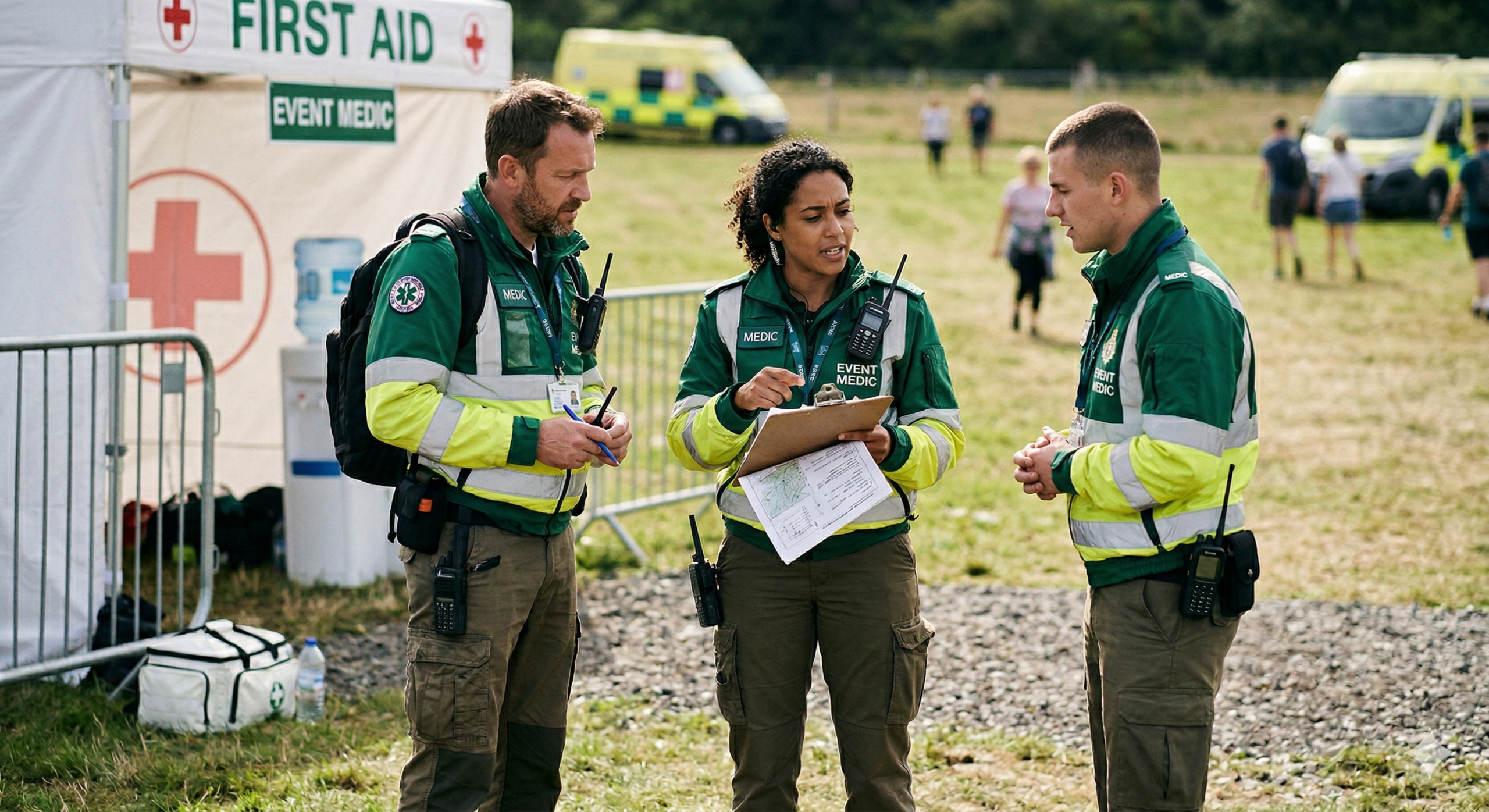
First Aid planning is one of the most consequential — and most frequently underestimated — parts of event production. Whether you’re organizing a festival, a corporate conference, a charity race, or a private gathering, having a structured approach to first aid readiness can mean the difference between a well-managed incident and a crisis.
This checklist is designed for event organizers who want a clear, practical framework for ensuring their first aid coverage is complete. Save it, share it with your team, and revisit it for every event you produce.
1. Pre-Event First Aid Planning
Define Your Event Profile
Before selecting a provider, understand the specific risk characteristics of your event. Consider your estimated attendance and the type of event — is it physically active, seated, or mixed? Think about the expected audience demographic, including age range and any known health considerations. Determine whether minors will be attending (SafeSport certification may be required for youth events). Factor in whether alcohol is being served, and review the weather and environmental conditions for the event date and venue.
Determine Coverage Requirements
Review local and state regulations for event First Aid coverage at your venue type. Check whether your venue has specific First Aid requirements. Determine whether your event also requires licensed EMS standby in addition to on-site first aid staffing. If your event is governed by USATF, a sports sanctioning body, or another organization, review their First Aid coverage requirements.
Select and Book Your First Aid Provider
Confirm all staff hold current EMT, Paramedic, or Registered Nurse credentials. Verify the provider operates under Physician Medical Director oversight. Confirm that background screenings are completed for all personnel. Ask about BLS certification for every staff member assigned to your event. If minors are attending, confirm SafeSport certification for applicable staff. Review documentation and incident reporting procedures. Understand the escalation protocol and how EMS coordination is handled. Confirm scheduling flexibility and minimum shift requirements.
Pre-Event Coordination
Assign a dedicated internal point of contact at your organization for the First Aid team. Confirm your dedicated event coordinator assignment with the First Aid provider. Share the event schedule, venue map, and vehicle access information with the First Aid team. Identify and confirm First Aid staging areas on your venue map. Confirm communication methods between First Aid Responders and event command. Brief venue staff and security on the location of the First Aid team and how to reach them.
2. Event Day Readiness
Arrival and Setup
Confirm First Aid team arrival time — ideally 15 to 30 minutes before the event begins. Verify that staff headcount on arrival matches the confirmed roster. Confirm that supplies are on-site, accessible, and fully stocked. Ensure First Aid areas are clearly marked and visible to attendees who may need to find them.
Communication and Coordination
Confirm radio or phone communication between First Aid Responders and event command is working. Ensure all event staff and security personnel know how to reach the First Aid team in an emergency. Provide the First Aid team with venue emergency contact numbers and the location of the nearest hospital or urgent care.
Escalation Readiness
Confirm the location of the nearest hospital emergency department and urgent care. Know your local EMS station and estimated response time to your venue. Review ambulance vehicle access routes to all areas of your venue.
3. Post-Event Follow-Up
Request a post-event incident report from the First Aid provider. Review the number and types of encounters logged during the event. Note any trends that may affect future planning — incident location, time of day, type of complaint. Ensure encounter documentation is stored securely and in compliance with HIPAA requirements. Schedule a debrief with your First Aid provider to review what worked and what could be improved for future events.
4. Supplies: What a Professional First Aid Team Should Bring
A well-equipped event First Aid team should arrive with blood and wound care supplies including bandages, dressings, wound closures, and tape; emergency care supplies including a CPR kit, and glucose supplies; splints and braces for musculoskeletal injuries; vital sign monitoring equipment; and personal protective equipment (PPE).
If you are providing supplemental first aid stations at additional locations within a large venue, confirm minimum supply requirements with your First Aid provider in advance.
5. Conclusion
First Aid planning doesn’t need to be overwhelming — but it does need to be intentional. Use this checklist as your foundation, customize it for your specific event type, and revisit it consistently across every event you produce.
Heed Health works closely with event organizers from the planning stage through post-event reporting — with a dedicated event coordinator guiding you through every step. Reach out to Heed Health to start the planning process for your next event.