
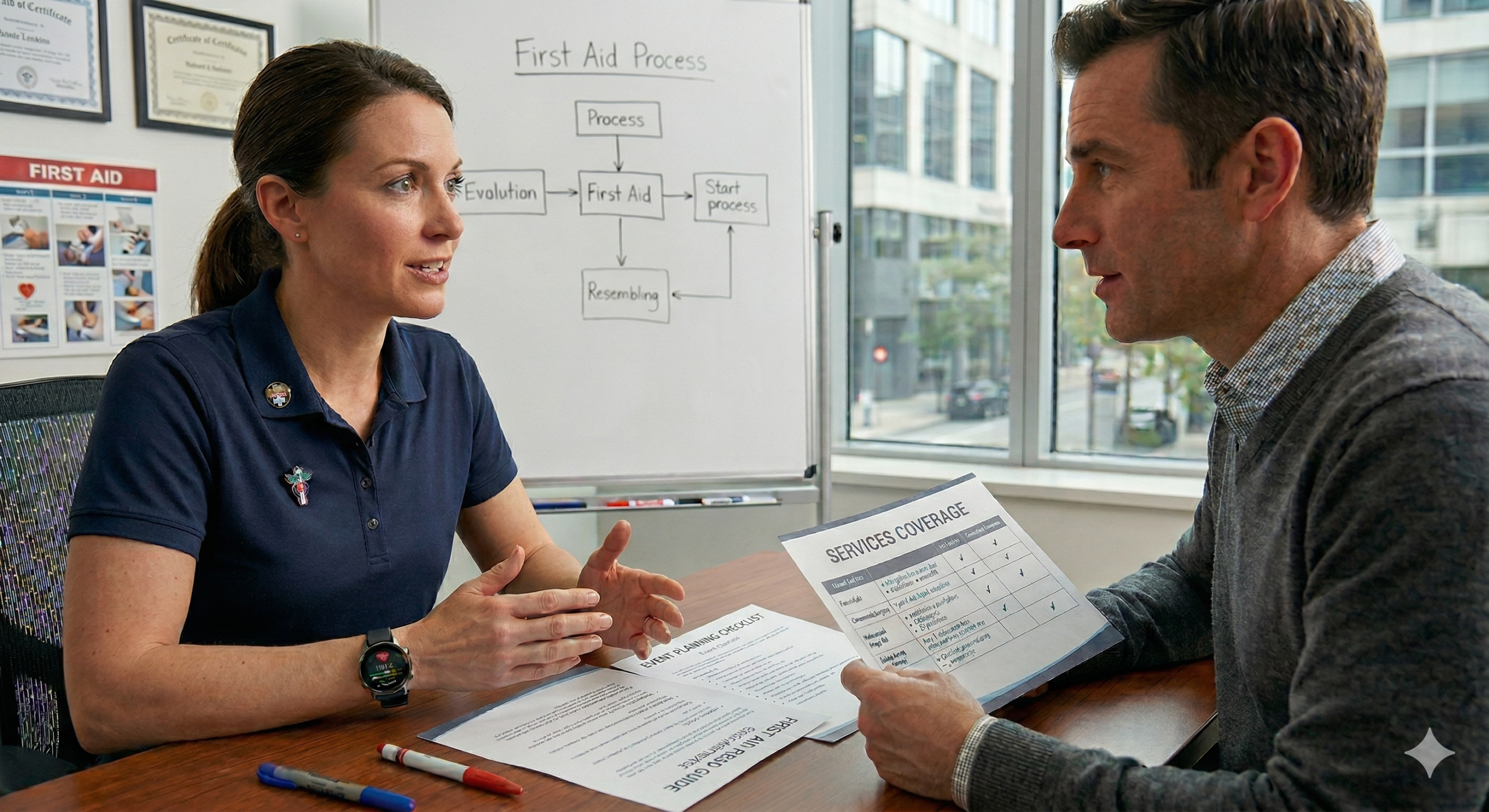
First Aid coverage is one of the most important parts of event planning — and one of the easiest to get right when you know what to look for. With so many event First Aid providers in the market, how do you know which one is right for your event?
This guide walks you through the key factors to consider when selecting on-site First Aid coverage, so you can make an informed decision.
1. Start with Your Event Activity Profile
Before you can choose the right First Aid coverage, you need to understand your event’s unique characteristics.
Attendance Size
Larger crowds mean higher volumes of potential incidents requiring first aid response. Events with more than 1,000 attendees typically benefit from multiple on-site First Aid Responders deployed across the venue.
Event Type and Activity Level
A corporate luncheon has a very different activity profile than a half marathon or a motocross competition. High-activity, high-contact, or outdoor events generally require more robust First Aid staffing and benefit from more on-site first aid coverage.
Venue and Location
Is your venue easily accessible by 911 responders? Events in remote or rural locations — or venues with limited vehicle access — need on-site First Aid teams that are prepared to manage situations until EMS can arrive.
Audience Demographics
Youth events, events serving larger senior populations, or gatherings with vulnerable populations require additional consideration around the type and level of First Aid coverage.
2. Understand What You’re Actually Buying
There’s a significant difference between a first aid tent with basic supplies and no trained staff, a staffed first aid team of certified EMTs or Paramedics, a physician-directed on-site First Aid team, and a standby ambulance with full ALS capabilities.
Most general events need a physician-directed on-site first aid team. This provides professional, physician-supervised coverage without the cost of a standby ambulance, while ensuring your team can respond to real incidents and escalate appropriately.
3. Key Questions to Ask Any Event First Aid Provider
Don’t just compare quotes. Here are the questions every event organizer should ask before signing a contract.
What credentials do your staff hold?
Look for licensed or certified EMTs, Paramedics, or Registered Nurses. Confirm BLS certification and ask about background screening policies for all personnel.
Do you operate under physician delegated authority?
This is one of the most important differentiators. A team with Physician Medical Director oversight works within physician-directed guidelines and has access to real-time consultation when it matters most.
What is your escalation protocol?
A good provider clearly explains how they handle situations that exceed first aid scope — including 911 activation, EMS handoff, and encounter documentation.
Do you maintain HIPAA-compliant documentation?
Every guest encounter at your event should be logged. Consents, refusals, and Against Medical Advice decisions should all be documented properly.
What is your minimum shift requirement and scheduling flexibility?
Some providers require 6 or 8-hour minimums. Providers that offer shorter minimums — such as 4 hours — give you more flexibility to match coverage to your actual schedule.
What is your service area?
If you run events across multiple cities or states, working with a national provider ensures consistent quality and credentials wherever you operate.
4. Watch Out for These Red Flags
Vague or evasive answers about staff credentials, no mention of physician oversight, claims that they can replace EMS in all situations, absence of any documentation or reporting process, and no dedicated point of contact for your specific event are all warning signs.
5. Consider the Full Service Experience
First Aid coverage isn’t just about the personnel on-site — it’s about the entire service model. Is there a dedicated coordinator managing your event from booking through post-event reporting? How does the provider handle pre-event planning and logistics? Is there a direct line of communication before, during, and after your event?
A provider that assigns a dedicated event coordinator alongside credentialed First Aid Responders delivers a fundamentally better experience than one that simply shows up on the day.
6. Consider the Full Service Experience
The right event First Aid coverage is professional, credentialed, physician-directed, and designed around the specific needs of your event. It provides clear escalation guidelines, thorough documentation, and a service model that supports you from planning through execution.
Heed Health checks every one of these boxes — with certified EMTs and Paramedics, Physician Medical Director oversight, a dedicated event coordinator for every booking, and national coverage across more than 27 states. Contact Heed Health to discuss what your event needs.